

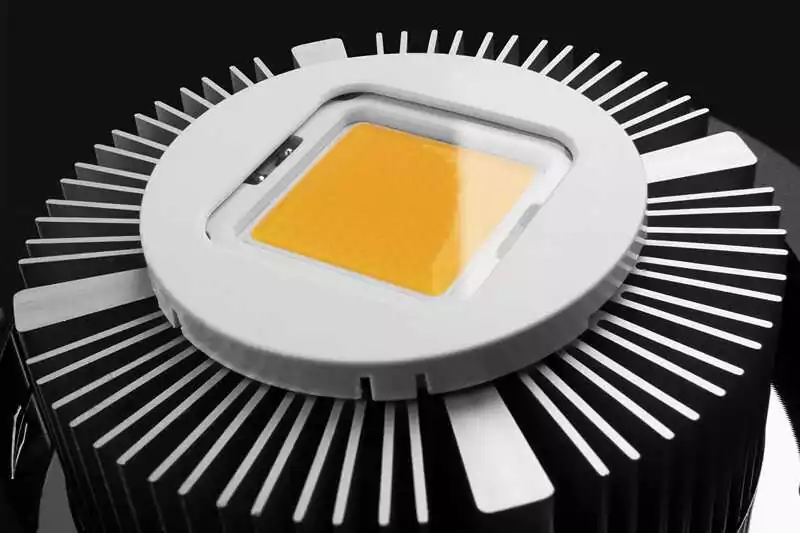
LED Cold Forging Technology Analysis
For the longest time, there have been only two main types of radiators for LED spotlights, LED bulbs, LED ceiling lights, LED miner’s lamps, LED track lights, etc. on the market. They are the CNC turning of aluminum profiles, and the zinc-aluminum alloy ingots made from the die-casting method.
But today, there is a new “one-piece” radiator, that is produced by the new process of cold extrusion, also known as cold forging. Let’s analyze the characteristics of these three radiator production processes.
-
Cast Zinc-Aluminum Alloy Shell (LED Die-Casting Heat Sink):
The major advantages of zinc-aluminum alloy radiators include lower processing costs and high productivity. Depending on the molds, you can also produce radiators of various shapes. But they also come with many limitations as poor thermal conductivity. The aluminum used has a thermal conductivity of 96W/MK, which is poor. The auxiliary oxidation residue, and the need for surface spray or electroplating treatment.
Because of very thick, the heat dissipation area is small and this results in poor heat dissipation. The die-casting radiator surface can only be sprayed or electroplated, which makes it difficult to anodize. The surface will also peel off after using the heat sink for some time. Casting may not allow for multiple shapes production as every mold is suitable for one product.
-
Aluminum Profile Machining (Car Aluminum):
This process is usually used to make LED radiators that are sunflower-shaped. The aluminum material used is usually A6063. The advantage of aluminum profile CNC turning radiator is better heat dissipation than die-casting. The surface treatment of the finished product, such as anodization, is relatively easy. The cycle of mold-making is usually 10 to 15 days, which is shorter than die-casting.
But there are also disadvantages that come with aluminum profile CNC turning radiators. They are usually made of aluminum alloy 6063, which is 201W/MK and may offer the best heat dissipation. It is also important to note that fins may be riveted and if they get loose, heat dissipation may be compromised. The later machining costs are high, the scrap rate is high, and the production efficiency is low.
-
The cold forging (forging) process:
The cold forging of the LED is the latest technology in the manufacturing of heat radiators. It is a forging process where metal forging is done at room temperature or below the metal’s recrystallization temperature. The forming processing uses a forging machine to apply pressure to a metal blank, which is placed on a die, to cause plastic deformation to change its original size, shape, and performance. That’s how the required shape and size are obtained.
The cold forging one-piece radiator is produced by forging 1070 pure aluminum. The heat dissipation of a cold-forged radiator of the same size as an LED lamp cup is more than twice that of die-casting, and more than one-third that of aluminum profile turning machining. Cold forged radiators are also lighter.
Cold forging can realize less cutting or no cutting processing, which saves raw material costs. This can also increase the production efficiency of the radiators. The cost performance is also better. These are elements that’s making it replace die-casting processing and extruded profile machining methods.
Moreover, cold forging can also process products with complex shapes that are difficult to achieve by the other two methods. It can also meet the special performance requirements of some products than die-casting and machining processes. The other advantages of a cold forging process include:
- Better product shape
- Better Size accuracy
- Good internal density
- High forging strength
- Smooth forging surface
- Few processing procedures
- Easy automated production.
Application Range Of Cold Forging Products
So many industries are now using forging, and more cold forging, in the manufacturing of various parts. Apart from the LED lighting industry, communication products, IT hardware products, computer electrical refrigeration, machinery, optical instruments, automobiles, motorcycles, aerospace, and other industries are other areas where forged metal parts and accessories are widely used.
Conclusion
The bottom line is that there are benefits that cold forging has over the die-casting, and the aluminum profile turning machining methods. The low processing cost, high productivity, shorter mold production cycle, and cheaper molds are some of the reasons making forging poplar. The heat dissipation of a cold-forged radiator is also better than the other two methods.