

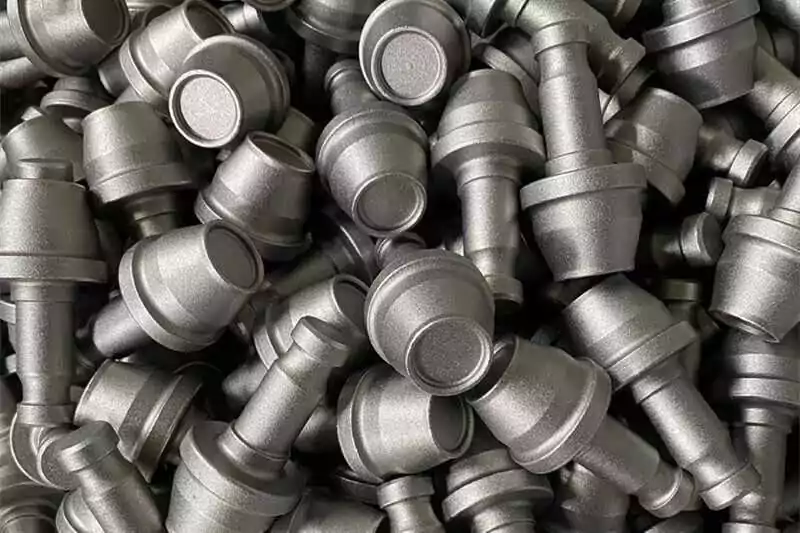
Cold and Warm Extrusion Molding Process Of Road Milling Tooth Cutter Body
Pavement or road milling machine is the main equipment of asphalt concrete pavement maintenance and construction machinery. You can find these machines in excavating and renovation of asphalt concrete surfaces such as highways, urban roads, airports, freight yards, etc. They are ideal for removing road congestion, oil waves, netting, rutting, and other defects.
Road milling machines can also find use in excavating pavement pots and trenches. They are also common for roughening cement pavements and milling staggered surfaces. It is the most economical and modern maintenance method to mill the damaged old pavement and then lay the new pavement.
Road milling teeth are also known as road milling bits, cold planer teeth, asphalt milling teeth, etc. It is the main accessory of road milling machines for cutting the worn-out road surface. These machine uses the contact between the milling teeth and the ground to perform road milling operations.
The milling process ensures the cutter head of the milling machine can be flexibly rotated during milling operation, and the resistance of the cutter head in the work is reduced as much as possible, and the road material can be cut quickly.
The economics of the use of milling teeth directly determines the cost of road maintenance. Hot forging and machining have been the most common manufacturing processes for these teeth. Hot forging of milling cutter body blanks have the following shortcomings: the processing speed is slow, the tooth body machining allowance is large, the material utilization rate is not high, and the tooth body crystal grain size after hot forging is coarse, resulting in excessive wear.
This is why cold and warm forging methods are increasingly popular with manufacturers because they address these shortcomings. After the cold forging process, the milling cutter body blanks have the advantages of fine grain size, good heat treatment performance, small machining allowance, and high batch production.
The fine grain size is a key factor that increases the hardness and strength of the forged milling cutter body. This ensures the milling cutter teeth can withstand impact and temperature damages. The small machining allowance feature enables the manufacturer to reduce finishing costs. The cold and warm forging processes produce neat net-shaped products, which reduces the need for finishing work.
Cold forging and warm forging have higher material utilization, and the production is higher than hot forging. The overall cost of producing milling cutter teeth cold and warm extrusion is also lower.
Cxin Forging uses cold and warm extrusion technology to produce milling teeth body blanks, with high automation and fast mass shipments. It is a tooth body supplier for many milling gear brands in Europe and the United States.
Cxin Forging focuses on the production and processing technology of hot forging, warm extrusion, and cold forging. The company has offered hot and cold precision forging of aluminum alloy, carbon steel, stainless steel, and other metal materials for more than 10 years. We also provide customers with CNC machining centers and brazing and surfacing, and other processing services. If you also have this requirement, please contact us